


Whether you're looking to expand network reach or improve bandwidth, this article will provide valuable insights into how SFP ports can meet your network's evolving needs.
SFP ports are widely used in networking devices to extend transmission distances beyond the 100-meter limit of traditional copper cables (like RJ45). By supporting a variety of modules, SFP ports can accommodate both fiber optic and copper media, providing higher bandwidth and more stable connections. Fiber optic modules are ideal for long-distance transmission, supporting connections from a few kilometers to tens of kilometers, making them perfect for campus networks, inter-city links, or wide-area networks. On the other hand, copper modules are better suited for short-range connections, such as linking devices within data centers or enterprise networks, offering an efficient and cost-effective solution.
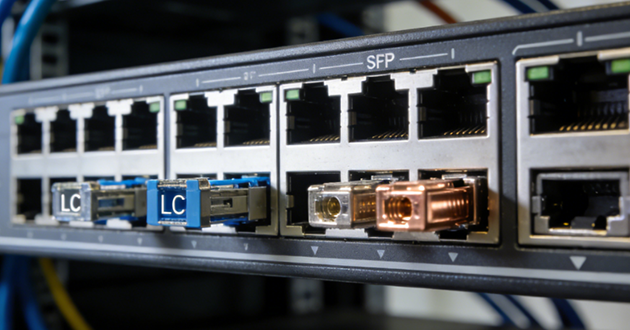
This flexibility makes SFP ports essential in data centers, enterprise networks, and telecommunications, where the demand for greater bandwidth continues to rise. Users can easily upgrade their network by swapping out modules, ensuring scalability for future growth. Whether used for core network links or storage area networks (SAN), SFP modules provide reliable, high-performance solutions that support a range of transmission speeds and methods, ensuring smooth network operation.
One of the key advantages of SFP ports is their exceptional flexibility and modularity. Users can choose from a variety of SFP modules based on specific needs, allowing network devices to be customized for different applications. With support for both fiber optic (single-mode and multi-mode) and copper modules, SFP connectors enable seamless switching between different media types and transmission methods, overcoming the limitations of fixed ports. This flexibility is especially valuable for both small businesses and large data centers, where network configurations must adapt to changing topologies and increasing bandwidth demands. It allows for easy adjustments without replacing entire systems, making upgrades more cost-effective and supporting scalable growth.
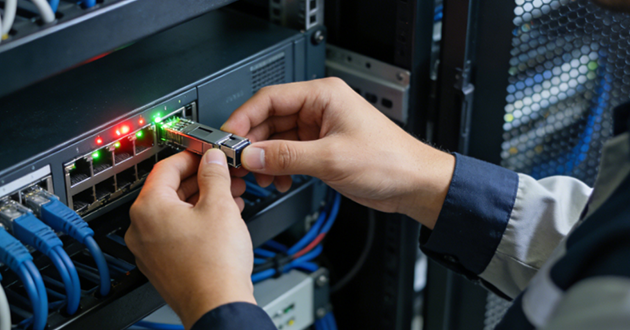
SFP modules enhance long-distance data transmission through various fiber optic connections. Multi-mode fiber modules are ideal for short to medium-range connections, typically covering distances from a few hundred meters to 2 kilometers. These are well-suited for LAN environments, such as interconnecting devices within a building or a data center. In contrast, single-mode fiber modules support longer distances, ranging from several kilometers to tens of kilometers, making them perfect for WAN and MAN networks, particularly for long-distance, cross-city, or regional connections. By selecting the right fiber type and module, users can optimize their network design, ensuring efficient data transfer while maintaining reliable connections, even under heavy traffic.
SFP modules support a wide range of high-speed data transmission rates, including 1G, 10G, 25G, and higher speeds (e.g., SFP28 and QSFP). This makes them ideal for data-intensive applications, such as HD video streaming, cloud computing, big data analytics, and high-frequency trading. As data volumes continue to grow, so do bandwidth demands, and SFP cages offer an effective solution to meet these challenges. By upgrading to higher-performance SFP modules, organizations can easily scale their bandwidth without needing to replace entire systems. For core network links and critical infrastructure, it ensure reliable, high-performance connectivity that minimizes latency and packet loss, ultimately boosting overall network performance.
The modular design of SFP ports makes it simple to expand and upgrade networks as demands increase. Instead of replacing entire devices, users can simply swap out or add new SFP modules to increase bandwidth, reducing the need for costly hardware replacements. As networks evolve to meet future requirements—such as high-frequency trading or the rapid growth of IoT—SFP ports offer flexible and scalable infrastructure. This modularity ensures that networks can easily adapt to new technological advancements, providing long-term reliability and helping businesses stay competitive in a constantly evolving environment.
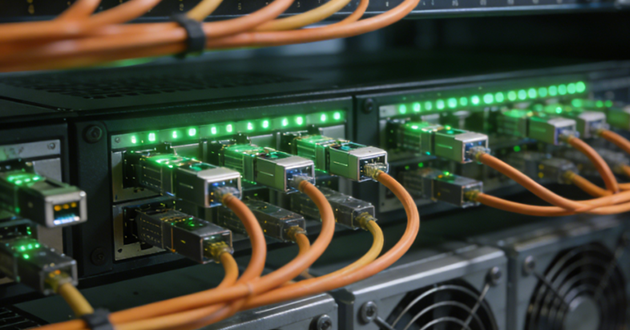
The hot-swappable nature of SFP ports greatly simplifies maintenance and upgrades. Users can insert or remove SFP modules without shutting down the system or interrupting network services. This is particularly valuable in high-availability environments like data centers and enterprise core networks, where uptime is critical. Hot-swapping not only reduces downtime during maintenance and upgrades but also enhances network flexibility and reliability. It simplifies troubleshooting and minimizes the risk of network disruptions due to human error, ensuring continuous, stable performance and improving overall IT infrastructure efficiency.
SFP ports are essential for switch uplinks, supporting various speeds and media types to enable high-speed interconnections with core switches or aggregation layer devices. GLGNET provides high-quality SFP Cage & Connectors that ensure superior signal transmission, maintaining signal integrity even in complex network environments and minimizing latency. In high-density data transfer scenarios, products effectively reduce link interference and packet loss, boosting network stability and reliability. Additionally, the SFP modules feature exceptional EMI shielding, significantly reducing electromagnetic interference and ensuring stable, high-speed connections that meet the stringent reliability requirements of enterprise-grade switches.
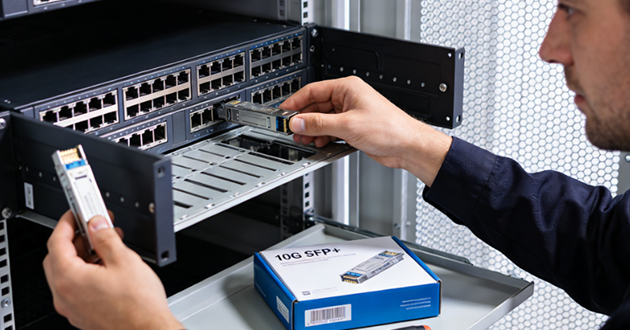
In data centers, SFP ports are frequently used for interconnecting switches (Inter-Switch Link, ISL), facilitating the transfer of large volumes of data. The optimized SFP connectors and modules support speeds of 1Gbps or higher, ensuring reliable, stable performance. Even in high-traffic environments,products maintain excellent signal stability,with EMI shielding effectively preventing interference, ensuring seamless signal transmission. In high-load applications such as data centers, GLGNET SFP solutions minimize signal degradation, enhance data throughput, and maintain low latency, ensuring smooth, efficient inter-switch connectivity.
SFP ports offer an ideal solution for connecting servers to network switches or storage networks, delivering high-speed, low-latency data exchange. GLGNET SFP products are compatible with a wide range of modules, providing the flexibility to adapt to various network configurations and device needs, including fiber optic connections to switches or direct interconnections via NIC cards. Made from high-quality materials,they provide robust bandwidth, ensuring stable performance and efficient data transfer even in high-load environments. Whether in virtualized environments or high-frequency trading scenarios where quick responses are critical, GLGNET ensures continuous, efficient data flow, optimizing server-to-network communication and enhancing the reliability and real-time performance of data exchanges.
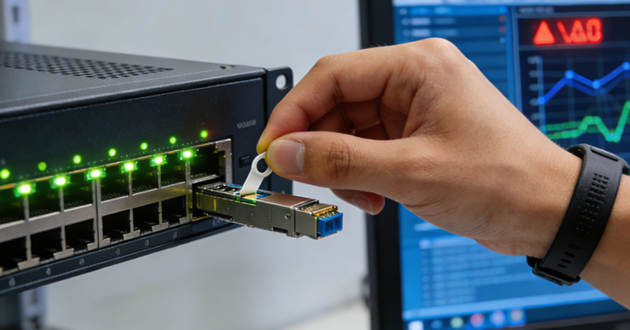
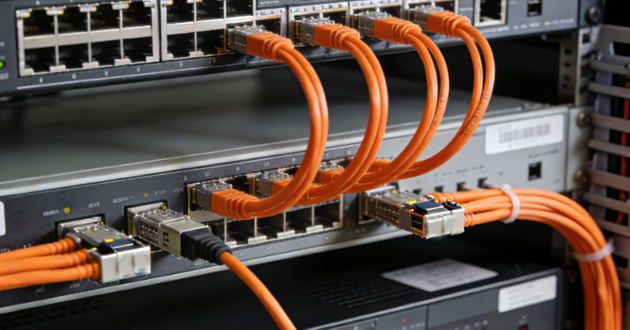
SFP fiber optic modules provide high-speed, stable connections between switch nodes across different buildings or campuses, making them perfect for expanding networks across multiple sites. GLGNET SFP Cage & Connectors are compatible with industry-standard SFP modules, offering flexible installation and configuration options, which integrate seamlessly into cross-building fiber cabling systems to extend network coverage. By using SFP fiber modules, users can increase transmission distances while maintaining signal stability and reducing electromagnetic interference. Products ensure high transmission speeds and exceptional signal quality, even over long distances, preserving network performance across extended coverage areas.
SFP ports are commonly used in Storage Area Networks (SAN) to connect storage devices and servers, especially in large-scale storage environments. GLGNET offers SFP solutions compatible with Fibre Channel protocols, supporting high-speed, stable data transmission for efficient, reliable data transfer in large storage systems. The high-quality fiber transmission modules enhance bandwidth capacity, making them ideal for high-frequency data access applications like video editing and large-scale backups or recovery. Additionally, products are known for their durability and thermal management, ensuring consistent performance even under heavy loads, and facilitating continuous, efficient data access, ultimately boosting the reliability and performance of the storage area network.
|
SFP Module Type |
Description |
Use Case |
|
Copper SFP (1000BASE-T) |
RJ45 interface, short-range copper cable |
Ideal for short-distance copper connections |
|
Short-Reach Fiber SFP |
Multi-mode fiber (e.g., 1000BASE-SX) |
Suitable for use within server rooms or data centers |
|
Long-Reach Fiber SFP |
Single-mode fiber (LX / EX / ZX) |
Best for metropolitan area networks (MANs) or building-to-building connections |
Read more:
https://www.glgnet.biz/articledetail/emi-springs-on-sfp-cages-shielding-grounding-or-heat-path.html
Conclusion
In conclusion, SFP ports are essential for ensuring high-speed, reliable connections in modern network environments. Their ability to support both copper and fiber optic modules, along with their hot-swappable design, offers users a flexible and cost-effective solution for extending network reach and enhancing bandwidth.